
CK Updates
What a Pair of EAMV Surgical Gloves, a Kabaka’s Birthday, and a UGX 593 Trillion Plan Have in Frequent – The Panorama Uganda

David GOMBE
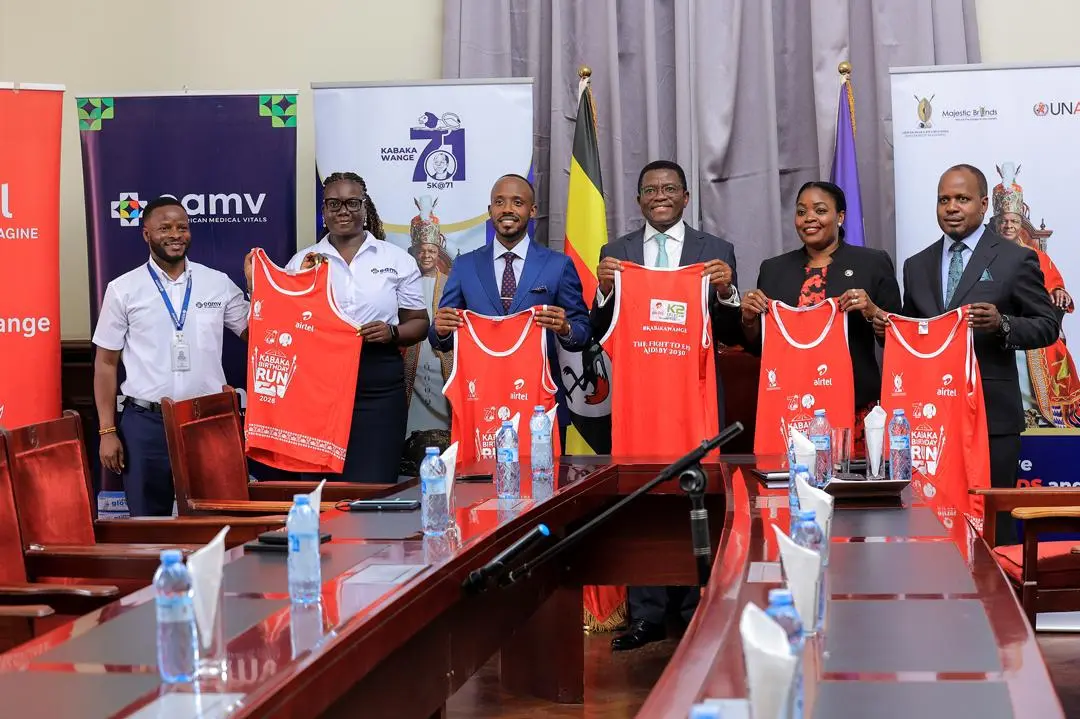
On, 31 March 2026, contained in the stately corridors of Bulange, Mengo, EAMV Managing Director Brian Kavuya handed a UGX 10 million cheque to Katikkiro Charles Peter Mayiga, confirming the corporate’s Silver Sponsorship of the thirteenth Kabaka’s Birthday Run. It was straightforward to cut back to a photograph alternative. However to take action could be to overlook the deeper present beneath the floor.
East African Medical Vitals is the primary producer of powder-free latex surgical gloves on the African continent. Its manufacturing facility in Namanve Industrial Park, Mukono, produces roughly 95 million gloves a 12 months. Its participation in a cultural well being marathon reveals a convergence that Uganda’s policymakers have been scripting for years: native trade, conventional authority, and nationwide well being targets pulling in the identical route.
A Run That Reads Like a Nationwide Growth Blueprint
Uganda’s Fourth Nationwide Growth Plan (NDP IV), overlaying FY 2025/26 to 2029/30, was authorised by Parliament in January 2025. Its objective: greater family earnings and employment for socio-economic transformation, pursued below the banner of “sustainable industrialization for inclusive progress, employment and wealth creation.” It’s the first of three five-year blueprints designed to ship a tenfold growth of the financial system by 2040.
NDP IV rests on 5 strategic goals: growing manufacturing, productiveness and worth addition; enhancing human capital improvement; supporting the personal sector to drive progress and create jobs; constructing strategic infrastructure; and strengthening governance.
EAMV’s sponsorship of the Kabaka Run touches at the very least three of those in a single occasion; a Ugandan manufacturing facility turning imported latex right into a completed medical gadget (worth addition and import substitution); a cultural establishment mobilising over 130,000 residents round a public well being message (human capital); and a personal firm channelling income again into neighborhood well being advocacy (personal sector as improvement accomplice). That is NDP IV occurring in the actual world.
Made in Namanve: The Industrial Story Behind the Cheque

EAMV was established by Ugandan entrepreneur Ben Brian Kavuya at a value of roughly USD 14.5 million, with important financing from the East African Growth Financial institution. Since producing its first glove in 2021, an occasion that drew President Museveni to Namanve, the corporate has grown right into a regional medical provides accomplice serving East and Central Africa, holding ISO 13485:2016 certification for medical gadgets and Q-Mark certification from the Uganda Nationwide Bureau of Requirements.
The numbers carry strategic weight. At full capability, EAMV meets roughly 70 p.c of Uganda’s home glove demand. Earlier than the corporate existed, each surgical glove utilized in a Ugandan theatre arrived by sea, taking as much as three months. EAMV delivers in three to 5 days. It has secured a ten-year off-take settlement with authorities overlaying 30 p.c of the nationwide glove market, and its operations have stemmed foreign exchange outflows of an estimated USD 17.8 million yearly. A second manufacturing line, launched in early 2025, has expanded capability additional and created lots of of extra jobs. That is exactly the enterprise NDP IV envisions when it requires “establishing factories that use domestically obtainable uncooked supplies” and “selling exports and import substitution.”
Working In the direction of 2030: The HIV Knowledge That Calls for Motion
This 12 months’s Run carries the theme “Males for Good Well being to Save the Woman Youngster and the Combat to Finish HIV/AIDS by 2030.” It refuses to be well mannered in regards to the epidemiological actuality: males stay a big transmission vector, and adolescent ladies and younger girls bear a disproportionate burden of recent infections.
The progress is actual however incomplete. In line with UNAIDS, nationwide HIV prevalence amongst adults aged 15–49 declined to 4.9 p.c in 2024, down from 7.3 p.c in 2010. New infections fell by 61 p.c over the identical interval, from 96,000 to 37,000 yearly. Antiretroviral remedy now reaches over 1.3 million Ugandans. Within the Buganda area, new infections fell 21 p.c between 2020 and 2024. But over 4,700 infants have been nonetheless born with HIV in 2024 alone. The Katikkiro’s message was direct: information, consciousness, and open communication stay the strongest weapons. NDP IV identifies human capital improvement — together with well being outcomes — as a pillar, recognising that no financial transformation is sturdy with out a wholesome inhabitants. The Run’s theme shouldn’t be merely a well being slogan. It’s a improvement argument.
What Company Uganda Can Be taught From a Pair of Gloves
NDP IV’s complete value over 5 years is estimated at UGX 593.6 trillion, of which 30.4 p.c, roughly UGX 180.4 trillion, is predicted from the personal sector. That isn’t charity. It’s co-investment in nationwide transformation. EAMV’s UGX 10 million could also be modest, nevertheless it represents one thing bigger: an organization that manufactures a frontline well being product selecting to put money into a neighborhood well being platform aligned with cultural custom and nationwide coverage.
“Our sponsorship is a testomony that now we have our communities on the coronary heart of our enterprise,” Kavuya stated on the handover. The Katikkiro acknowledged EAMV’s gloves as a key part of Uganda’s medical panorama and referred to as on males to take the lead in opposition to HIV. Corporations that concurrently create jobs, substitute imports, construct industrial capability, and put money into neighborhood well being reveal what NDP IV’s private-sector pillar seems like when it truly works.
Tradition, Commerce, and the Street to 2040
Uganda’s Imaginative and prescient 2040 aspires to rework the nation into a contemporary and affluent society. NDP IV is the car for the following leg of that journey. However plans don’t implement themselves. They require actors, enterprises that manufacture, establishments that mobilise, and residents who present up. When Brian Kavuya walked into Bulange with a cheque, he was demonstrating what it seems like when a Ugandan producer, constructed with East African capital, producing a product that saves lives in Ugandan theatres, reinvests within the well being of the communities it serves. That isn’t philanthropy. That’s improvement in movement.
The thirteenth Kabaka’s Birthday Run takes place on Sunday, 12 April 2026, flagged off from Lubiri, Mengo. Kits can be found at UGX 20,000. Race classes: 21km, 10km, and 5km.









Under the Good Friday Agreement – the 1998 peace accord that followed the conflict colloquially known as The Troubles – those born in Northern Ireland can hold both British and Irish passports.
A Court of Arbitration for Sport ruling in 2010 means players born anywhere on the island of Ireland are able to represent the Republic of Ireland regardless of whether they fulfil any other measure of eligibility, namely being born in the territory, having a biological mother, father, grandmother or grandfather born in the territory, or having lived there for an uninterrupted period of five years.
Players born in the Republic of Ireland, however, cannot represent Northern Ireland unless they are otherwise eligible.
“We exploit eligibility, the same as every other country does, down to the grandparent rule, but this is a rule which is obviously unique between ourselves and the FAI [Football Association of Ireland],” said O’Neill.
“I think everyone recognises it’s not particularly fair, but as I say, our focus is to make sure our pathway for our young players is as good as possible and that’s a pathway for boys from any part of the community.”
In May, FAI director of football John Martin said the organisation should at “the bare minimum” be sounding out eligible players.
“We know there are kids out there who want to play for Ireland who haven’t been approached in the past,” said Martin.
“That’s not right. It’s making sure we have a presence and we understand all the players available to us, and that they are being monitored and tracked.”
When asked whether the narrative around young players in or around his squad is tiresome to him, O’Neill said: “It would have been in the past, it’s not tiresome now.
“We have people who comment on this and talk about nationality and talk about identity and talk about all these different things, which are part of being born in Northern Ireland and growing up in Northern Ireland.
“But I think what we’re missing now is that we’re putting young players in a situation where they have to make a decision which is irreversible.”
CK Updates
F1 Q&A: Madring’s overtaking problem, virtual safety car operation and will there be any rookies in 2027?
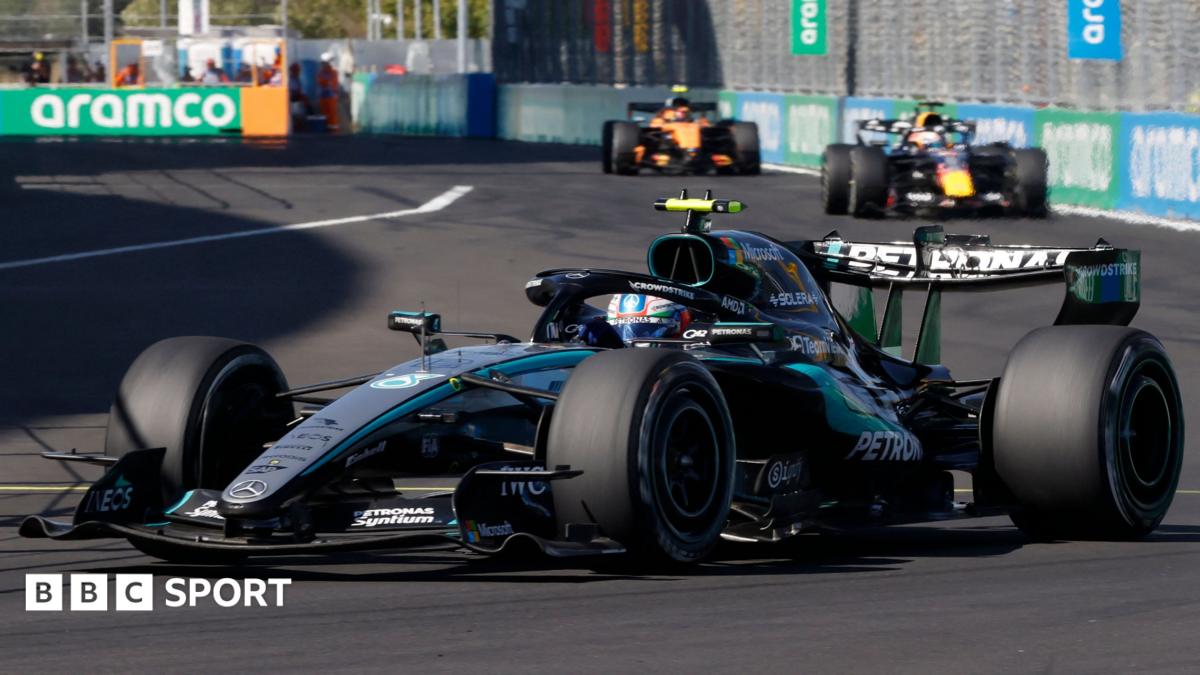
The virtual safety car (VSC) definitely throws jeopardy into races, but it does not do virtually what the safety car does. Would it not be more balanced to have a minimum of at least one full lap? Yes, this would dampen the jeopardy effect but what happened to Lando Norris feels like a chance card in Monopoly. – Kyle
Lando Norris’ bad luck with the virtual safety car at the Spanish Grand Prix has certainly focused attention on the ways this can disrupt races.
The VSC has always had issues – it freezes a race rather than resets it, which can be a bit boring compared to an actual safety car – but it has the benefit of minimising disruption when a track hazard can be cleared relatively quickly.
It has long been an opportunity for someone to benefit over a rival, because making a pit stop under a VSC takes significantly less time than under racing conditions.
But usually this has been in cases where one team has changed or deployed its strategy with the express intention of waiting for a safety car or VSC (such as Norris himself in his maiden victory in Miami in 2024), and benefiting over a rival who has run a more conventional strategy.
That sort of thing is considered fair game. What happened to Norris – a driver lost a race win because his specific track positioning at the time of a VSC meant he alone was unable to pit under it – is, to the best anyone could remember on Sunday, unique.
The media are not privy to conversations in drivers’ briefings, and Norris in particular gets a bit sniffy when information from those meetings leaks out because they are meant to be a safe space where the drivers and FIA can share opinions without it becoming a controversy.
But it emerged after the race that this issue, as Norris put it, “has been spoken about many, many times”.
Whether Norris’ misfortune leads to a change, such as ensuring that a VSC is deployed for at least one whole lap, remains to be seen.
There is no easy answer, because within F1 it’s recognised that safety cars are part of the competitive jigsaw, and can be used to a team’s advantage. And the latest rules have been arrived at after various previous iterations that worked in different ways, such as shutting the pit lane for specific periods.
McLaren team principal Andrea Stella said: “Offering a personal opinion, I’m puzzled myself as to what’s right.
“Is it correct to give enough duration such that everyone will have been subject to the same track conditions? So, for instance, the virtual safety car lasts at least one full lap.
“Or you just keep it in the hands of the Gods, and sometimes you are lucky, sometimes you are not. I’m not sure.”
There is process for these sorts of discussions – they go to a sporting advisory committee for analysis, before being reviewed by the F1 Commission of teams, commercial rights holder F1 and governing body the FIA.
That won’t happen quickly – unless it is decided by F1 and the FIA that it is a desirable outcome to change the rules. Right now, the momentum for that does not appear to be there.
What are the prospects for rookies coming into Formula 1 next year? Many drivers are re-signing long contracts with their teams. Are there likely to be any new recruits? – Mia
The most likely place for a new driver to come into F1 next season is Haas, where Esteban Ocon’s position looks shaky.
The two main candidates there are Italy’s reigning Formula 2 champion Leonardo Fornaroli, who is part of McLaren’s driver development programme, and Brazilian Rafael Camara, who is second in F2 this year and part of the Ferrari driver academy.
Both have tested for Haas and are said to have impressed the team.
Haas will want a quick driver who brings money, and it’s not clear who the favourite is. Ryo Hirakawa, Haas’ reserve driver and a long-time protege of Haas’ technical partner Toyota, is also in the picture, but considered a less likely candidate.
Elsewhere, there is talk of Red Bull considering moving F2 championship leader Nikola Tsolov, who is Bulgarian, into their Racing Bulls team.
To do so, they would have to drop either Liam Lawson or Arvid Lindblad. It’s hard to see how it would be Lindblad, after such an impressive rookie campaign.
But Lawson has also been doing a good job this year, so it’s not a given.
At Cadillac, they have Indycar race-winner Colton Herta as reserve. They have been planning for Herta to be in F1 before too long – the idea behind him moving to Europe and doing Formula 2 this year was so he could learn the ropes on this side of the Atlantic and be as prepared as possible for graduation to F1.
But Herta has had a very difficult F2 campaign this year – his best result is a fifth place and he is 19th in the championship – so moving him up to F1 for 2027 would be a massive risk.
Ugo Ugochukwu, who won the Formula 3 title in Madrid on Sunday, is another American said to be of interest to Cadillac.
He had been part of the McLaren driver development programme for several years until they parted ways at the end of last season.
But even if Ugochukwu’s Cadillac links become formalised, next year is probably too early for him to make F1.
He’s also extremely tall – well over six foot and much taller even than Ocon, Alex Albon and George Russell, the current tallest drivers – so getting him into an F1 car would not be easy.
The other teams are pretty much locked down, although it’s still unknown whether Fernando Alonso is going to continue in F1 next year.
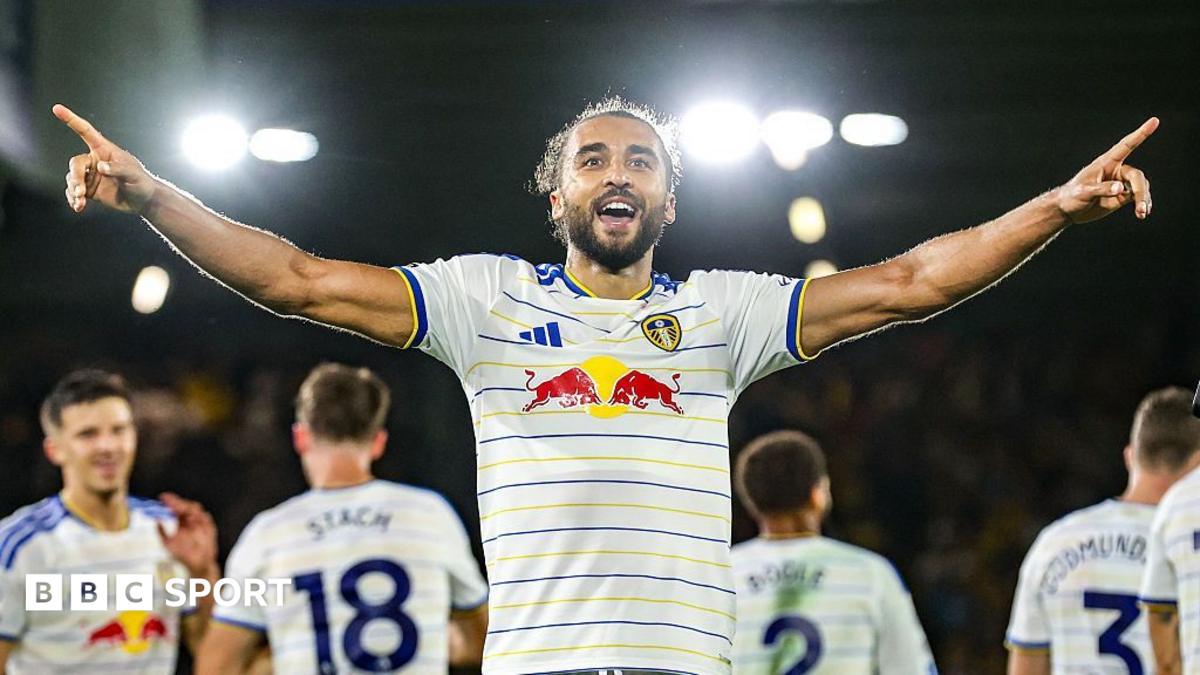
No side will relish coming up against Calvert-Lewin and this aggressive Leeds outfit at Elland Road this season.
In fact, only Arsenal (52), Manchester City (50), Manchester United (45) and Bournemouth (37) have won more Premier League points in 2026 than Leeds United (35), with the Whites suffering just a single defeat across their past 13 league matches.
Yet Newcastle‘s implosion was remarkable as a young team were bullied and outfought.
Newcastle had previously made a good start under head coach Matthias Jaissle, following so much change in the summer, and were unbeaten in their opening five games in all competitions before this reality check.
But they have faced more shots than any other side in the Premier League.
However clinical Newcastle were in the opening weeks of the campaign, they mustered just eight efforts on target against Liverpool, Tottenham Hotspur and Bournemouth before their trip to Elland Road.
That was a dangerous cocktail going into this game.
What was most galling, though, was the visitors’ failure to match Leeds‘ bite at a raucous Elland Road.
Jaissle’s side crumbled and conceded three goals in a chastening 14-minute period in the first half.
It was a night the German manager swore in his post-match news conference to illustrate how low he felt.
“I don’t want to point fingers and point any players out tonight,” he said. “We were not matching as a team the level of intensity, the level of duel behaviours, the level of physicality.
“This is something we need to bring on the pitch in every match. This is non-negotiable. It should be the basic fundamentals of football.
“These are young lads. The learning curve needs to be fast.”
For Calvert-Lewin and Leeds, however, this was a night to remember.

Northern Ireland: Eligibility rules ‘not particularly fair’ – Michael O’Neill

F1 Q&A: Madring’s overtaking problem, virtual safety car operation and will there be any rookies in 2027?

Leeds 4-1 Newcastle: Is ‘unplayable’ Calvert-Lewin in line for England recall?

Irish Premiership: Who will replace Declan Devine as Glentoran manager?

Josh Kerr: Ultimate Championship 1500m winner ramps up debate over country vs brands kit

Ludek Miklosko: Ex-West Ham goalkeeper dies aged 64

US Open 2026 results: Alexander Zverev beats Ben Shelton for second Grand Slam title

Erling Haaland goal: Was Haaland’s derby winner a VAR error?

World Athletics’ stance on Russian athletes ‘won’t change’ – Sebastian Coe

Tom Aspinall: UFC to consider removing heavyweight title after almost year out injured
Leeds 4-1 Newcastle: Is ‘unplayable’ Calvert-Lewin in line for England recall?
F1 Q&A: Madring’s overtaking problem, virtual safety car operation and will there be any rookies in 2027?
Irish Premiership: Who will replace Declan Devine as Glentoran manager?
-
 CK Updates12 hours ago
Leeds 4-1 Newcastle: Is ‘unplayable’ Calvert-Lewin in line for England recall?
-
 CK Updates6 hours ago
F1 Q&A: Madring’s overtaking problem, virtual safety car operation and will there be any rookies in 2027?
-
 CK Updates18 hours ago
Irish Premiership: Who will replace Declan Devine as Glentoran manager?