
CK Updates
LIVE: AFCON 2025 – 06 January 2026


Tuesday Jan 06, 2026. 22:50
Join AfricanFootball.com for LIVE updates from all 52 matches of the 2025 Africa Cup of Nations, as 24 teams battle for glory in Morocco from 21 December to 18 January.
Today’s matches:
18h00 – Algeria 1-0 DR Congo – Match Centre

21h00 – Code d’Ivoire v Burkina Faso – Match Centre
Updates:
Full-time: Ivory Coast 3-0 Burkina Faso – Emphatic performance by Ivory Coast who marches on to the final eight of the tournament. The Elephants will now take on Egypt on Saturday, 10 January.
90’ – Four minutes added on between Ivory Coast and Burkina Faso, as the Elephants come close to adding their fourth late on.
86’ – Goal! Two goals in two matches for Bazoumana Toure as he adds Ivory Coast’s third to cap off a professional performance by the champions.
85’ – Ivory Coast endure attacks from Burkina Faso as they kick into game management mode to see out the tie.
75’ – End to end stuff between Ivory Coast and Burkina Faso. The Stallions with some neat interplay en-route to goal after which the Elephants turned defence to attack in a matter of seconds. With Diallo’s effort saved, time begins to run out for Burkina Faso.
69’ – Ivory Coast come agonisingly close to adding a third after Evann Guessand saw a right-footed shot from the centre of the box going narrowly wide of the mark.
63’ – The hour-mark has passed at Stade de Marrakech as Burkina Faso now begin to turn the screws. Dango Ouattara’s right-footed shot just outside the six-yard area signalled the Stallions intent on getting on the scoresheet.
55’ – Burkina Faso are battling to make the most of their possession on the ball while Ivory Coast push on for the third goal.
46’ – We’re back with the second 45 between Ivory Coast and Burkina Faso
Half-time: Ivory Coast 2-0 Burkina Faso – The reigning AFCON champions in command at the break and are well on course to qualify for the quarter-finals of the showpiece.
45’ – Three minutes added on between Ivory Coast and Burkina Faso in Ouahat Sidi Brahim.
31’ – Goal! Ivory Coast double their advantage through Yan Diomande, who opens his account at the showpiece. Once again, incisive play by Diallo who drives the ball forward before picking out Diomande who subsequently guides the ball home on the edge of the box.
30’ – The Elephants remain with a goal to the good past the midway point of the first-half. Goal scoring chances keep streaming in while Burkina Faso defend their quarters.
19’ – Goal! Ivory Coast take the lead through Diallo, who has been the dangerman for his nation since the first whistle. Following a quick passing move on the edge of the area, the Manchester United star capped off the sequence with a goal from close range.
15’ – Burkina Faso defence in sixes and sevens as the ball was sloppily given away on the edge of the area. While Ivory Coast failed to make the most of the chance, Burkina Faso hold on for the moment.
10’ – Amad Diallo is proving to be a tricky customer to deal with as he continues to pressure the Burkina Faso backline with darting runs. With two chances created in quick succession, the Ivorians are well in control of the tie so far.
3’ – Frantic start to the match, Ivory Coast manufacture their first corner while Burkina Faso break quickly with a long range shot that was saved by the goalkeeper.
1’ – We’re off between Ivory Coast and Burkina Faso at Stade de Marrakech!
This will be the first meeting between the two nations at an AFCON tournament since 2012. Burkina Faso have won two of the last three matches against Ivory Coast, which will no doubt come as a confidence booster in facing the reigning champions.
Ivory Coast vs Burkina Faso starting line-ups:
Ivory Coast: Fofana, Doue, Kossounou, Ndicka, Konan, Kessie, Sangare, Oulai, Diallo, Guessand, Diomande
Burkina Faso: Koffi, Kouassi, Tapsoba, Dayo, Yago, Simpore, Ouedraogo,Irie, Nagalo, Ouattara, Traore
Full-time (AET) – Algeria 1 (Boulbina 119′) DR Congo 0. The Fennecs strike at the death to secure a dramatic victory over the Leopards following a bit of magic from Boulbina. They will meet Nigeria in the quarter-finals at the Marrakesh Stadium on January 10.
119′ – Goal! Algeria 1 DR Congo 0. Adil Boulbina is the hero for the Fennecs as he cuts inside from the right and rifles a shot in off the crossbar.
111′ – Mbemba gives the ball away in a dangerous position and Chaibi makes space for himself before firing off a shot that is well saved by Mpasi.
106′ – A quick turnaround sees DRC kick things off in the second half of extra time.
Half-time (ET) – Algeria 0 DR Congo 0. No chances of note in the opening 15 minutes and the game looks to be going to penalties if things continue this way.
99′ – No yellow cards in regulation time, but we’ve already had two bookings in extra time, both coming the way of Algeria’s Rafik Belghali and Moussa.
91′ – We’re back underway in the first half of extra time.
Full-time – Algeria 0 DR Congo 0. The game will go to extra time. The Fennecs grew in confidence as the second half progressed and created a handful of chances, with the Leopards required to do a lot more defending.
86′ – The ball falls for Moussam from a corner, but his shot is straight at Mpasi. Good opportunity missed for Algeria.
83′ – Algeria threaten again as Maza gets on the end of a free-kick, but sees his downward header bounce wide of the right post.
80′ – Mohamed Amoura gets the better of Chancel Mbemba in a foot race and tests Mpasi with a shot from inside the box.
78′ – Mpasi is finally called into action as he makes a comfortable save from Anis Hadj Moussam who cut inside from the right before letting fly from range.
74′ – Edo Kayembe tries his luck from range, but Zidane is well placed to make a good save. That was the first shot on target.
70′ – There’s just 20 minutes left in regulation time and we’ve yet to see single shot on taget. Extra-time could be beckoning here.
69′ – Riyad Mahrez goes for goal from a long way out and his free-kick flies over the crossbar.
60′ An hour gone and it’s been a low-quality game thus far. One goal might just be enough to separate the two teams.
53′ – Hicham Boudaoui delivers a cross into the danger area which is met by Chaibi, but his header is disappointing as it misses the target by a good few yards.
50′ – Algeria are forced into an early change in the second half as Ismael Bennacer is replaced by Himad Abdelli after picking up what appears to be a muscular injury.
46′ – Algeria get the ball rolling in the second half in Rabat.
Half-time – Algeria 0 DR Congo 0. The Fennecs enjoyed slightly more possession in the opening 45 minutes, but they hardly threatened Lionel Mpasi’s goal, while the Leopards looked more dangerous and went closest to breaking the deadlock through a header from Tuanzebe.
45′ – There will be just one minute added on at the end of the first half.
43 – Ibrahim Maza runs at the defence and unleashes a shot that flies well wide of the right post. That was Algeria’s first shot at goal.
32′ – Another chance for DR Congo as Bakambu gets on the end of Aaron Wan-Bissaka’s cross from the right, but can’t direct his header on target,
27′ – The resulting corner sees Axel Tuanzebe rise above his marker to steer a header wide of the left post.
25 ‘ – Bakambu flicks on a long ball and manages to latch onto a return pass. He advances towards goal and gets off a shot that was going wide, but Luca Zidane palms the ball away for a corner.
20′ – Cedric Bakambu is walking a disciplinary tightrope after committing three fouls inside the opening 20 minutes. His next foul could well result in a booking.
15′ – The possession stakes at the 15-minute mark is 64-36 per cent in favour of the Fennecs.
11’ – Algeria win the first corner of the game. However, Fares Chaibi’s delivery is poor as it doesn’t clear the first man.
‘8’ – A scrappy start to the game as neither team has managed to settle down yet. DR Congo have done well to deny Algeria space by applying a press.
1′ – DR Congo get proceedings underway at the Moulay Hassan Stadium.
What the managers said:
Algeria head coach Vladimir Petkovic: “Congo is a well-built team, and you can clearly see the coach’s influence. Offensively, they are especially dangerous down the right side.
“They attack with a positive approach and strong momentum, and this is reflected in their results, both in the qualifiers and in knockout matches. They may not be used to facing opponents of a certain caliber, but they are still capable of eliminating them.”
DR Congo head coach Sebastien Desabre: “These are high-stakes matches, since a place in the quarter-finals is at stake against a very good African team.
“For us, we’re happy because it helps us continue to improve in match preparation. It will also give us a lot of experience in managing this kind of game.
“And for us, we keep going, we don’t feel any extra pressure. In Congo, we’re used to having high pressure in matches. The players know this, and we actually like it.”
DR Congo have been more consistent on Africa’s biggest stage, finishing third in 2015 and fourth in 2023, while they were eliminated at the quarter-final stage in 2017 and the round of 16 in 2019. The only time the Leopards failed to progress beyond the group stages came in 2013, while the failed to qualify for AFCON 2021.
Algeria, who were crowned champions for the second time in 2019, are bidding to reach the quarter-finals for only the third time in seven consecutive appearances. The Fennces bowed out of the tournament at the group stages in the 2013, 2017, 2021 and 2023 editions, while they went no further than the last eight in 2015.
Algeria v DR Congo starting line-ups:
Algeria: L. Zidane, R. Belghali, A. Mandi, R. Bensebaini, R. Ait-Nouri, H. Boudaoui, I. Bennacer, F. Chaibi, R. Mahrez, I. Maza, M. Amoura.
DR Congo: L. Mpasi, A. Wan-Bissaka, A. Tuanzebe, S. Moutoussamy, C. Mbemba, J. Kayembe, T. Bongonda, N. Mukau, M. Elia, N. Sadiki, C. Bakambu.









Under the Good Friday Agreement – the 1998 peace accord that followed the conflict colloquially known as The Troubles – those born in Northern Ireland can hold both British and Irish passports.
A Court of Arbitration for Sport ruling in 2010 means players born anywhere on the island of Ireland are able to represent the Republic of Ireland regardless of whether they fulfil any other measure of eligibility, namely being born in the territory, having a biological mother, father, grandmother or grandfather born in the territory, or having lived there for an uninterrupted period of five years.
Players born in the Republic of Ireland, however, cannot represent Northern Ireland unless they are otherwise eligible.
“We exploit eligibility, the same as every other country does, down to the grandparent rule, but this is a rule which is obviously unique between ourselves and the FAI [Football Association of Ireland],” said O’Neill.
“I think everyone recognises it’s not particularly fair, but as I say, our focus is to make sure our pathway for our young players is as good as possible and that’s a pathway for boys from any part of the community.”
In May, FAI director of football John Martin said the organisation should at “the bare minimum” be sounding out eligible players.
“We know there are kids out there who want to play for Ireland who haven’t been approached in the past,” said Martin.
“That’s not right. It’s making sure we have a presence and we understand all the players available to us, and that they are being monitored and tracked.”
When asked whether the narrative around young players in or around his squad is tiresome to him, O’Neill said: “It would have been in the past, it’s not tiresome now.
“We have people who comment on this and talk about nationality and talk about identity and talk about all these different things, which are part of being born in Northern Ireland and growing up in Northern Ireland.
“But I think what we’re missing now is that we’re putting young players in a situation where they have to make a decision which is irreversible.”
CK Updates
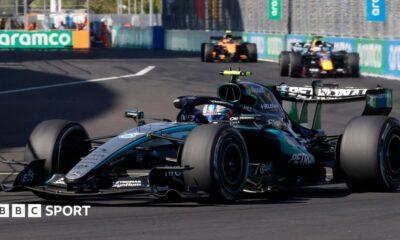
F1 Q&A: Madring’s overtaking problem, virtual safety car operation and will there be any rookies in 2027?
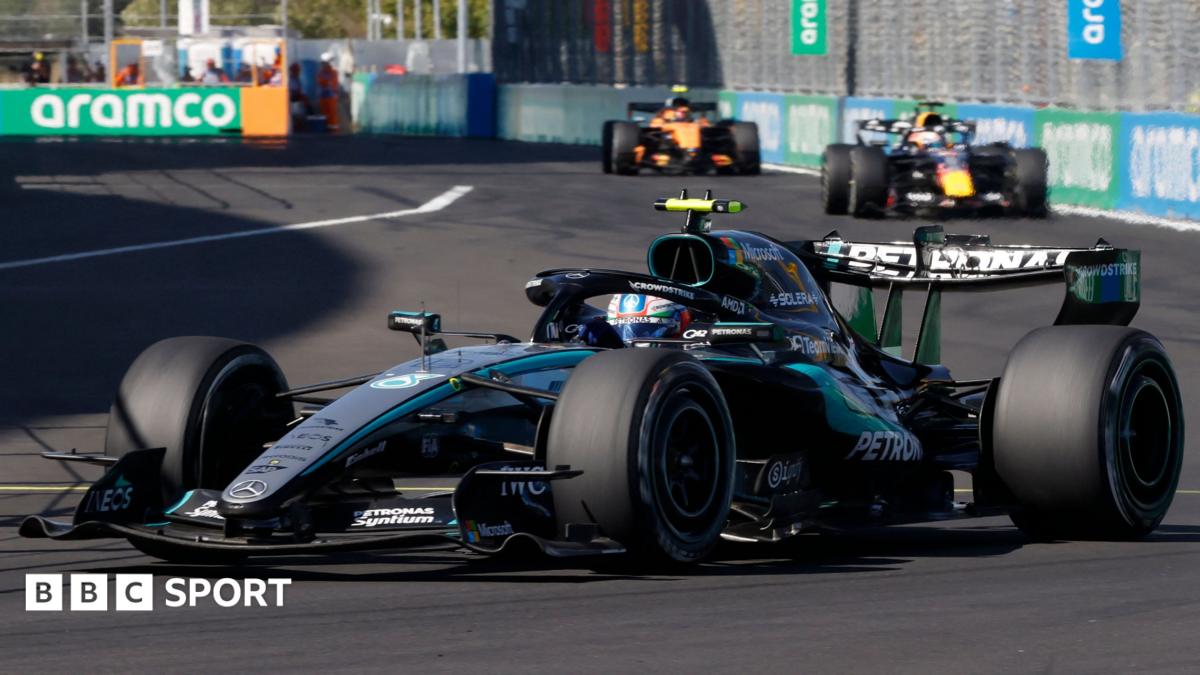
The virtual safety car (VSC) definitely throws jeopardy into races, but it does not do virtually what the safety car does. Would it not be more balanced to have a minimum of at least one full lap? Yes, this would dampen the jeopardy effect but what happened to Lando Norris feels like a chance card in Monopoly. – Kyle
Lando Norris’ bad luck with the virtual safety car at the Spanish Grand Prix has certainly focused attention on the ways this can disrupt races.
The VSC has always had issues – it freezes a race rather than resets it, which can be a bit boring compared to an actual safety car – but it has the benefit of minimising disruption when a track hazard can be cleared relatively quickly.
It has long been an opportunity for someone to benefit over a rival, because making a pit stop under a VSC takes significantly less time than under racing conditions.
But usually this has been in cases where one team has changed or deployed its strategy with the express intention of waiting for a safety car or VSC (such as Norris himself in his maiden victory in Miami in 2024), and benefiting over a rival who has run a more conventional strategy.
That sort of thing is considered fair game. What happened to Norris – a driver lost a race win because his specific track positioning at the time of a VSC meant he alone was unable to pit under it – is, to the best anyone could remember on Sunday, unique.
The media are not privy to conversations in drivers’ briefings, and Norris in particular gets a bit sniffy when information from those meetings leaks out because they are meant to be a safe space where the drivers and FIA can share opinions without it becoming a controversy.
But it emerged after the race that this issue, as Norris put it, “has been spoken about many, many times”.
Whether Norris’ misfortune leads to a change, such as ensuring that a VSC is deployed for at least one whole lap, remains to be seen.
There is no easy answer, because within F1 it’s recognised that safety cars are part of the competitive jigsaw, and can be used to a team’s advantage. And the latest rules have been arrived at after various previous iterations that worked in different ways, such as shutting the pit lane for specific periods.
McLaren team principal Andrea Stella said: “Offering a personal opinion, I’m puzzled myself as to what’s right.
“Is it correct to give enough duration such that everyone will have been subject to the same track conditions? So, for instance, the virtual safety car lasts at least one full lap.
“Or you just keep it in the hands of the Gods, and sometimes you are lucky, sometimes you are not. I’m not sure.”
There is process for these sorts of discussions – they go to a sporting advisory committee for analysis, before being reviewed by the F1 Commission of teams, commercial rights holder F1 and governing body the FIA.
That won’t happen quickly – unless it is decided by F1 and the FIA that it is a desirable outcome to change the rules. Right now, the momentum for that does not appear to be there.
What are the prospects for rookies coming into Formula 1 next year? Many drivers are re-signing long contracts with their teams. Are there likely to be any new recruits? – Mia
The most likely place for a new driver to come into F1 next season is Haas, where Esteban Ocon’s position looks shaky.
The two main candidates there are Italy’s reigning Formula 2 champion Leonardo Fornaroli, who is part of McLaren’s driver development programme, and Brazilian Rafael Camara, who is second in F2 this year and part of the Ferrari driver academy.
Both have tested for Haas and are said to have impressed the team.
Haas will want a quick driver who brings money, and it’s not clear who the favourite is. Ryo Hirakawa, Haas’ reserve driver and a long-time protege of Haas’ technical partner Toyota, is also in the picture, but considered a less likely candidate.
Elsewhere, there is talk of Red Bull considering moving F2 championship leader Nikola Tsolov, who is Bulgarian, into their Racing Bulls team.
To do so, they would have to drop either Liam Lawson or Arvid Lindblad. It’s hard to see how it would be Lindblad, after such an impressive rookie campaign.
But Lawson has also been doing a good job this year, so it’s not a given.
At Cadillac, they have Indycar race-winner Colton Herta as reserve. They have been planning for Herta to be in F1 before too long – the idea behind him moving to Europe and doing Formula 2 this year was so he could learn the ropes on this side of the Atlantic and be as prepared as possible for graduation to F1.
But Herta has had a very difficult F2 campaign this year – his best result is a fifth place and he is 19th in the championship – so moving him up to F1 for 2027 would be a massive risk.
Ugo Ugochukwu, who won the Formula 3 title in Madrid on Sunday, is another American said to be of interest to Cadillac.
He had been part of the McLaren driver development programme for several years until they parted ways at the end of last season.
But even if Ugochukwu’s Cadillac links become formalised, next year is probably too early for him to make F1.
He’s also extremely tall – well over six foot and much taller even than Ocon, Alex Albon and George Russell, the current tallest drivers – so getting him into an F1 car would not be easy.
The other teams are pretty much locked down, although it’s still unknown whether Fernando Alonso is going to continue in F1 next year.
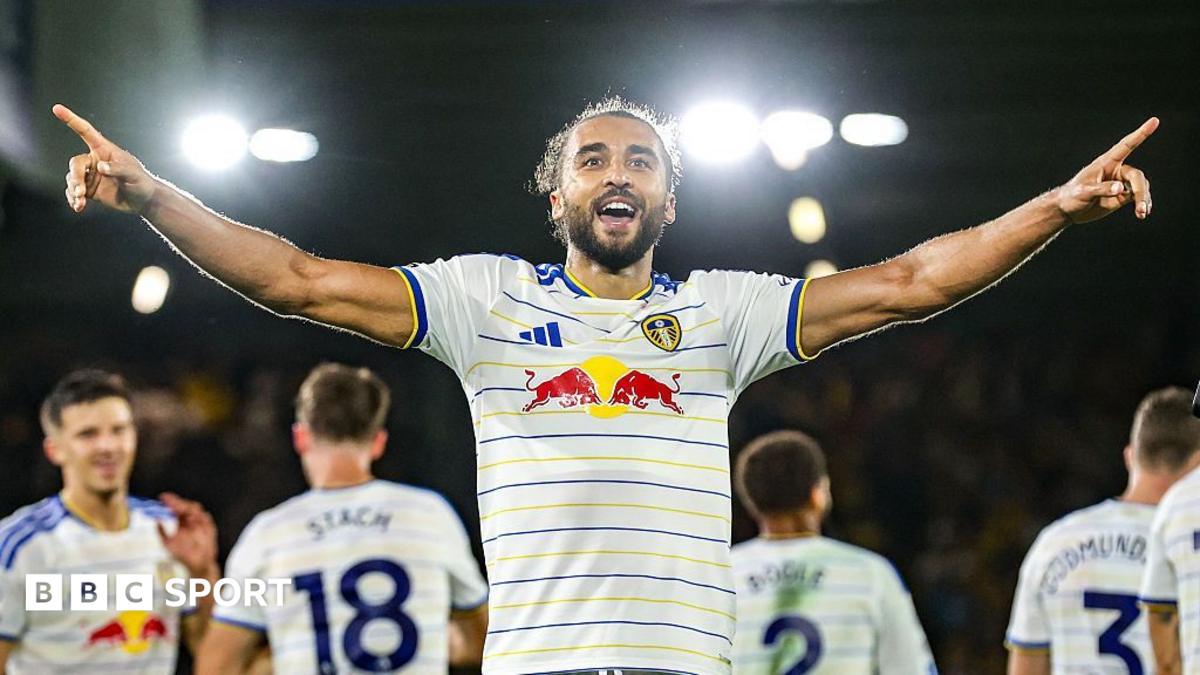
No side will relish coming up against Calvert-Lewin and this aggressive Leeds outfit at Elland Road this season.
In fact, only Arsenal (52), Manchester City (50), Manchester United (45) and Bournemouth (37) have won more Premier League points in 2026 than Leeds United (35), with the Whites suffering just a single defeat across their past 13 league matches.
Yet Newcastle‘s implosion was remarkable as a young team were bullied and outfought.
Newcastle had previously made a good start under head coach Matthias Jaissle, following so much change in the summer, and were unbeaten in their opening five games in all competitions before this reality check.
But they have faced more shots than any other side in the Premier League.
However clinical Newcastle were in the opening weeks of the campaign, they mustered just eight efforts on target against Liverpool, Tottenham Hotspur and Bournemouth before their trip to Elland Road.
That was a dangerous cocktail going into this game.
What was most galling, though, was the visitors’ failure to match Leeds‘ bite at a raucous Elland Road.
Jaissle’s side crumbled and conceded three goals in a chastening 14-minute period in the first half.
It was a night the German manager swore in his post-match news conference to illustrate how low he felt.
“I don’t want to point fingers and point any players out tonight,” he said. “We were not matching as a team the level of intensity, the level of duel behaviours, the level of physicality.
“This is something we need to bring on the pitch in every match. This is non-negotiable. It should be the basic fundamentals of football.
“These are young lads. The learning curve needs to be fast.”
For Calvert-Lewin and Leeds, however, this was a night to remember.

Northern Ireland: Eligibility rules ‘not particularly fair’ – Michael O’Neill

F1 Q&A: Madring’s overtaking problem, virtual safety car operation and will there be any rookies in 2027?

Leeds 4-1 Newcastle: Is ‘unplayable’ Calvert-Lewin in line for England recall?

Irish Premiership: Who will replace Declan Devine as Glentoran manager?

Josh Kerr: Ultimate Championship 1500m winner ramps up debate over country vs brands kit

Ludek Miklosko: Ex-West Ham goalkeeper dies aged 64

US Open 2026 results: Alexander Zverev beats Ben Shelton for second Grand Slam title

Erling Haaland goal: Was Haaland’s derby winner a VAR error?

World Athletics’ stance on Russian athletes ‘won’t change’ – Sebastian Coe

Tom Aspinall: UFC to consider removing heavyweight title after almost year out injured
Irish Premiership: Who will replace Declan Devine as Glentoran manager?
Leeds 4-1 Newcastle: Is ‘unplayable’ Calvert-Lewin in line for England recall?
F1 Q&A: Madring’s overtaking problem, virtual safety car operation and will there be any rookies in 2027?
-
 CK Updates20 hours ago
Irish Premiership: Who will replace Declan Devine as Glentoran manager?
-
 CK Updates14 hours ago
Leeds 4-1 Newcastle: Is ‘unplayable’ Calvert-Lewin in line for England recall?
-
 CK Updates8 hours ago
F1 Q&A: Madring’s overtaking problem, virtual safety car operation and will there be any rookies in 2027?