
CK Updates
Australia v Bangladesh: Mehidy Hasan Miraz inspires visitors to historic first Test win in Australia

First Test, Darwin (day four of five)
Australia 198: (Smith 71; Mahmud 6-55) & 284 (Green 104; Miraz 5-66)
Bangladesh 426: (Tanzid 101, Shanto 84, Miraz 65; Hazlewood 6-89) & 57-1 (Mominul 30*)
Bangladesh win by nine wickets
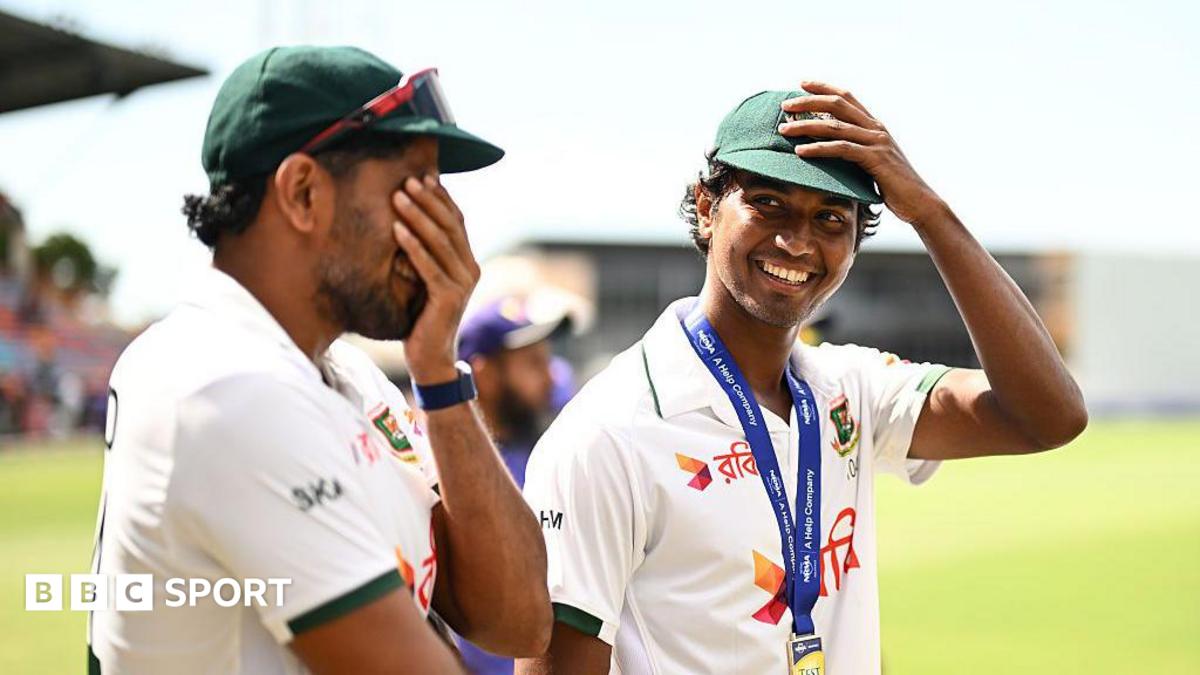
Bangladesh thrashed Australia by nine wickets on the fourth day of the series-opener in Darwin to complete one of Test cricket’s greatest upsets.
After bowling the hosts out for 284 and needing 57 to win, Mominul Haque cut Beau Webster to the boundary for the winning runs to seal the nation’s first Test victory in Australia.

The moment sparked jubilation among Bangladesh players and staff as they celebrated arguably their greatest victory in 26 years of competing in Test cricket.
Australia are the top-ranked Test nation while Bangladesh haven’t played a series under the five-day format in the country since a 2-0 defeat in 2003.
The visitors were on top of the match throughout, but it was spinner Mehidy Hasan Miraz who took the spotlight on day four as he took 5-66 to dismiss Australia for 284, leaving just 57 runs needed to win.
All-rounder Cameron Green showed fight with a valiant 104 but after being bowled by Hasan Mahmud, Australia’s faint hopes of saving the Test all but disappeared.
Seamer Mahmud was named player of the match after claiming 6-55 in the first innings and 3-56 in the second.
“This is the biggest win so far for Bangladesh in any format,” captain Najmul Hossain Shanto said.
“Going forward we want to do something special in the future. I’m very happy, proud of myself and the way the boys played. We did a lot of hard work.”
Speaking on ABC, commentator Jim Maxwell described the result as one of the most “embarrassing defeats that Australia have ever suffered in Test cricket”.




CK Updates
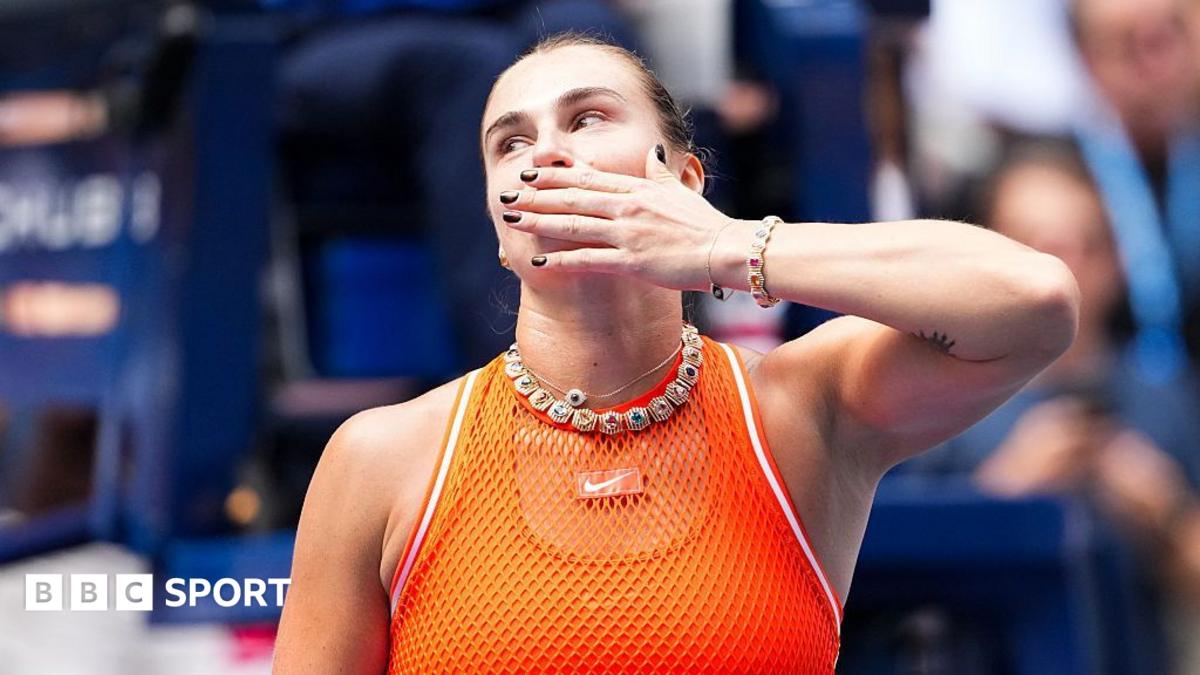
US Open 2026 results: Aryna Sabalenka’s win over Kamilla Rakhimova interrupted by cannabis smell
American third seed Jessica Pegula kept her bid for a first Grand Slam title alive by coming from a set down to beat Leylah Fernandez.
Pegula, who lost the final at Flushing Meadows two years ago to Sabalenka, came through 1-6 6-4 6-3 against the Canadian 31st seed.
Fernandez showed glimpses of the form that took her to the 2021 US Open final, where she lost to Emma Raducanu, as she raced through the first set in under 30 minutes.
But Pegula played with more patience to secure the decisive break at the end of the second set – albeit with some help from a net cord.
She saved two break points at the start of the deciding set, before breaking in the next game and going on to see out victory with a backhand volley.
“I wasn’t moving my feet up to the ball, and I was a little lazy to start off,” Pegula, 32, said.
“I was going to have to dig deep. I’m glad I was able to find somewhere there in the second set to turn it around.”
Pegula will play Romanian 16th seed Sorana Cirstea in the fourth round after she beat Italian 19th seed Jasmine Paolini 6-3 6-3.
Later, Czech seventh seed Muchova lost 6-3 7-5 to American 26th seed Navarro.
Muchova had been competing in her first tournament since undergoing minor surgery after reaching July’s Wimbledon final.
Navarro will play Ukrainian ninth seed Elina Svitolina or Russian 21st seed Anna Kalinskaya in the fourth round.
Ukrainian 11th seed Marta Kostyuk is also safely though to the last-16 after beating Ekaterina Alexandrova 6-3 6-2.
In the women’s doubles, Britons Harriet Dart and Maia Lumsden ousted Croatia’s Petra Marcinko and Ukraine’s Oleksandra Oliynykova 7-5 6-3 to reach the second round.
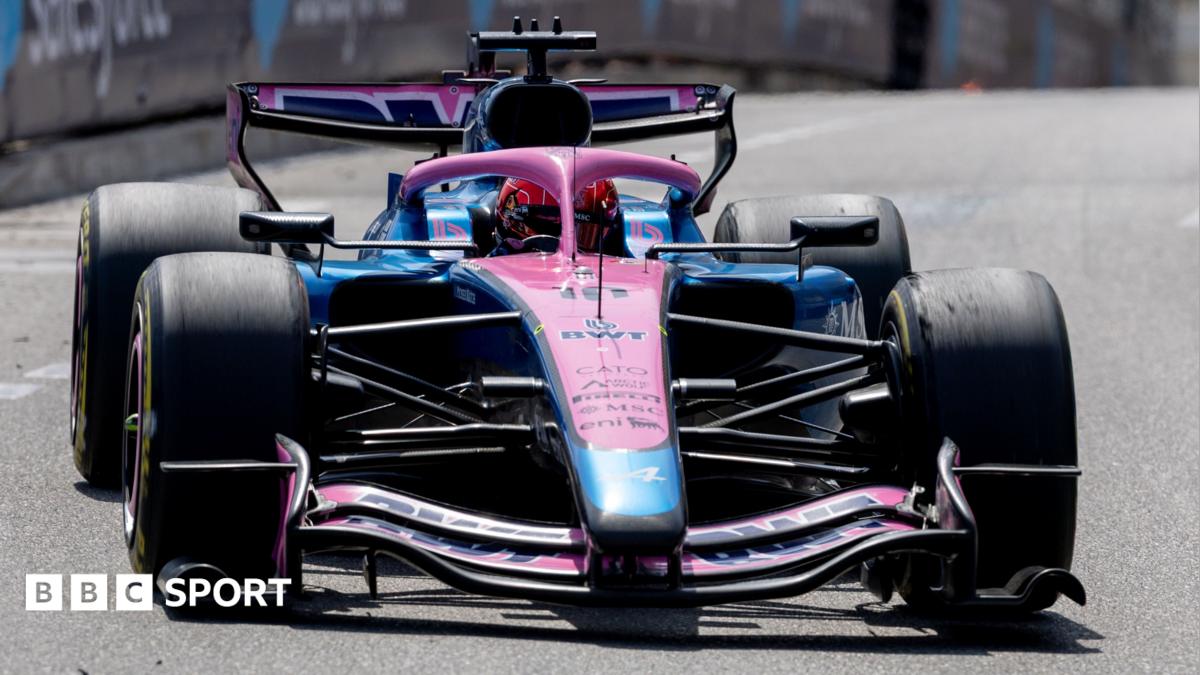
The discrepancy between the official F1 measurement and the possible shorter distance did not mean that the official measurement was incorrect, the court said.
While it was concluded after the race that a shorter line was possible, the court of appeal ruled that “sporting fairness absolutely precludes the retrospective replacement” of an established calibration parameter “by a different geometric or measurement approach for the purpose of re-adjudicating an individual competitor’s result”.
The controversy arose from the fact that there was a 77-centimetre discrepancy between the officially measured distance of the pit lane and the real shortest route a driver could take.
It was established at Alpine’s appeal in June that Gasly had not exceeded the pit-lane speeding limit by this new measurement, which was why the penalty was overturned.
However, McLaren appealed on the grounds of sporting fairness and their own competitive interests, as Piastri had lost two points as a consequence of the situation.
The Australian was one of several drivers who did serve a five-second pit-lane speeding penalty.
The court of appeal verdict rests on the following conclusions:
-
F1 is designated by the FIA to measure the pit-lane speed limit, which is applied by “average speed over the relevant timing sector rather than instantaneous speed”.
-
The distance applied should be the same for each car.
-
Although it was later established that Gasly never exceeded the 60km/h limit over a shorter distance it was possible to take, the “benchmark cannot be retrospectively displaced for one competitor after the competition has been conducted against it”.
-
Although F1 concluded after the event that a shorter distance, measured by a different method, meant it should have selected a different line for its calculation, that did not mean the original calculation was inaccurate of itself.
-
The pit-lane length applied “was physically tape-measured, checked before being entered, used throughout free practice sessions and the race, specifically re-examined when concerns were raised before the race, and reconfirmed again during the race when the stewards sought reassurance. At no point did F1 advise the competitors, race control or the stewards that a different distance parameter should apply”.
-
“The enforcement regime… is workable only if the benchmark against which all competitors calibrate is common, stable and applied equally throughout the competition”.
-
“Once the official timekeeper has established and adopted the distance parameter used… and competitors have been required to calibrate their cars and conduct the competition by reference to that common parameter, sporting fairness and equal treatment require that the parameter remains fixed”.
Alpine said in a statement: “While we disagree with the decision, and still fully maintain that car 10 (Gasly) did not exceed the pit-lane speed limit at any point during the race, the team acknowledges the decision of the judging panel from the recent hearing in Paris.
“While the result is not what we had hoped for, as we feel that we have been unjustly punished, the team is firmly focused on continuing to improve its performance on track and remains in a close and very competitive championship fight.”
McLaren said: “We welcome the decision of the FIA international court of appeal, a decision which provides important clarity for teams and all the sport’s stakeholders and helps protect the integrity of the sport and trust in its regulatory framework.
“Our appeal was not directed at any competitor or at the FIA. It was brought, and pursued to its conclusion, in the interests of the sport and to support the consistent and fair application of the regulations for all participants.”
The court of appeal did not address the question of whether the pit-lane speeding penalties awarded to Ferrari’s Lewis Hamilton, Russell and Piastri were correct under the established measurement, or whether their cars ever physically exceeded the 60km/h limit.
That was not relevant to the bounds of the hearing, which was to address McLaren’s and Red Bull’s protest against the decision to rescind Gasly’s penalty.
Mercedes also contend that Russell never exceeded 60km/h. He was running ahead of Hadjar and Gasly before his first penalty.
He was demoted out of the points because Mercedes failed to correctly serve the penalty at a subsequent pit stop. That offence earned a drive-through penalty which dropped him to 12th place.
Alpine say they have sent the trophy for third place over to Red Bull’s Milton Keynes base, and that they are considering their options as to whether to take the case further.
Their only remaining likely course of action, should they wish to pursue it, would be to go to the Court of Arbitration for Sport.
CK Updates
Harry Kane: Europe’s top scorer plays like a midfielder – we asked him to break down his game
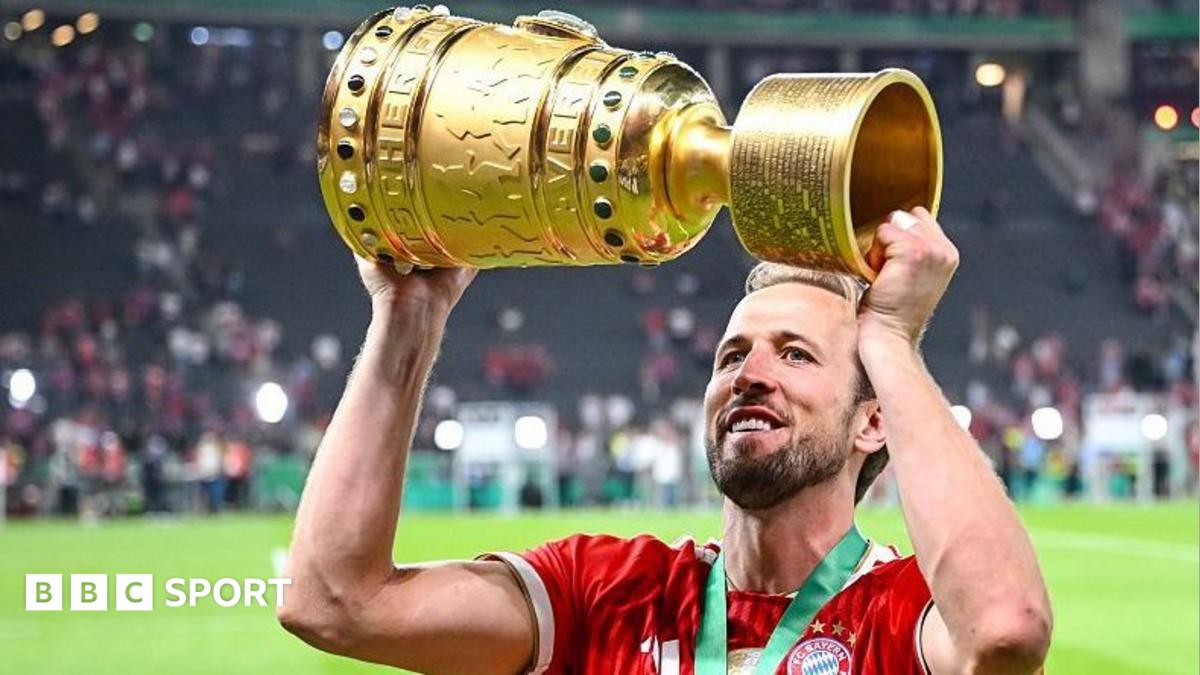
“Over the last five or six years, man-to-man pressure has become bigger,” Kane says.
“European football is physical and top teams are trying to win the ball back high, trusting their defenders and midfielders to defend man for man to win their battles.”
Given that change, the best teams have recruited physical athletes and brilliant dribblers who can beat their man when the game becomes a series of one-against-ones.
Kane, not known for his dribbling – and by his own admission “not the fastest”, has thrived on his own terms.
Against Dortmund, there was a specific moment Kane dropped deep, looking to arrive in space unmarked. Recognising the danger, two players converged on the Englishman.
Kane’s dribbling is cerebral. His speed of thought provides him solutions to problems others would attempt to solve with their feet alone.
After getting low and using his strength to shrug centre-back Waldemar Anton off him, Kane rose, slightly adjusting his body to the right. These micro-adjustments are a hallmark of his game and through them he is able to shift an entire team’s momentum.
Fooled by this feint, Daniel Svensson and Jobe Bellingham found themselves wrong-footed as Kane snapped the ball back the other way, opening up the entire pitch from within Bayern’s half.

US Open 2026 results: Aryna Sabalenka’s win over Kamilla Rakhimova interrupted by cannabis smell

Pierre Gasly loses Monaco podium after McLaren and Red Bull win appeals

Harry Kane: Europe’s top scorer plays like a midfielder – we asked him to break down his game

Brian Barry-Murphy: Head coach to become Cardiff’s longest serving boss since Neil Warnock

US Open: Felix Auger-Aliassime beaten by Karen Khachanov in second round

Ismaila Sarr: Crystal Palace forward needs time to process collapse of Liverpool move – Pierre Sage

Women’s Super League: Eva Olid promises ‘brave’ Manchester United

US Open 2026 results: Aryna Sabalenka continues title defence with one of the quickest Grand Slam wins of her career

Women’s Super League: Man Utd sign Mexican Rebeca Bernal

Tiger Woods gets five-year driving ban after reckless driving plea
Pierre Gasly loses Monaco podium after McLaren and Red Bull win appeals
Brian Barry-Murphy: Head coach to become Cardiff’s longest serving boss since Neil Warnock
Harry Kane: Europe’s top scorer plays like a midfielder – we asked him to break down his game
-
 CK Updates7 hours ago
Pierre Gasly loses Monaco podium after McLaren and Red Bull win appeals
-
 CK Updates19 hours ago
Brian Barry-Murphy: Head coach to become Cardiff’s longest serving boss since Neil Warnock
-
 CK Updates13 hours ago
Harry Kane: Europe’s top scorer plays like a midfielder – we asked him to break down his game